05 The waterline · Su çizgisi
The waterline
Archimedes, painted on the side of a ship in white. Nothing about it can be argued with, which is why the whole industry runs on it.
- Draft
- 6.20m
- Displacement
- 32,157t
- Cargo
- 5,957t
- Aboard
- 635TEU
- Freeboard
- 13.10m
Drag, or use the arrow keys. Twelve rendered states, one camera, one exposure — only the load changes.
01b The same ship, twice
Light, and loaded.
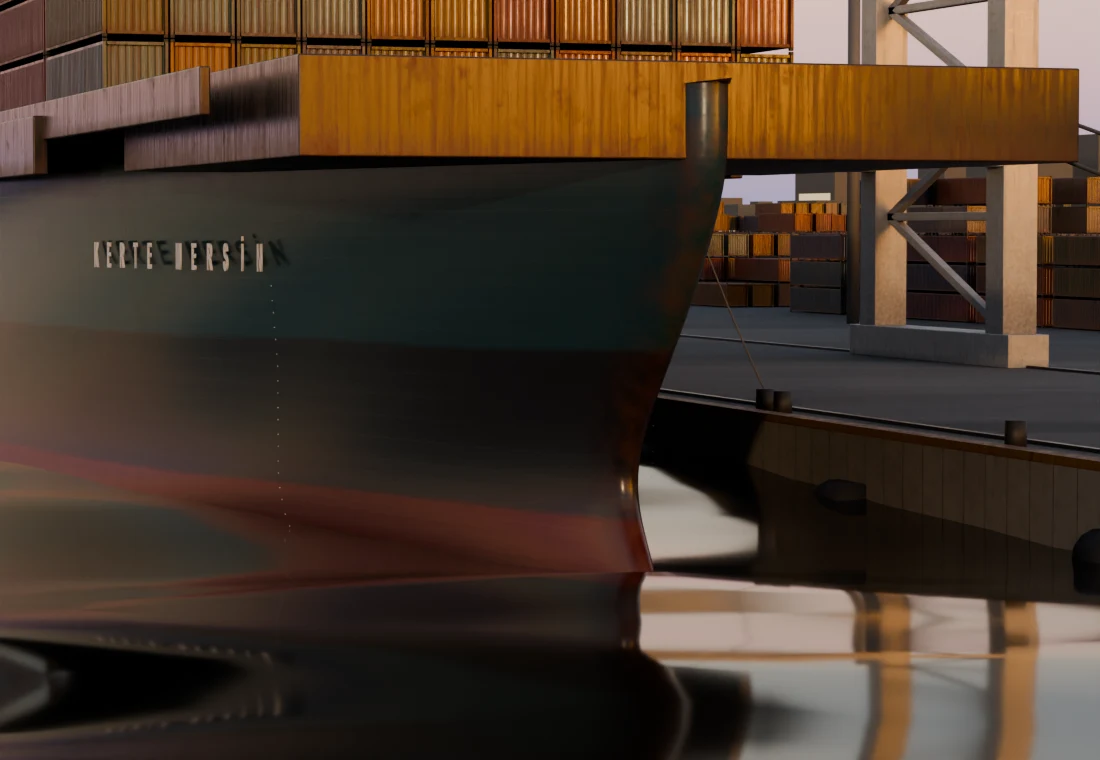
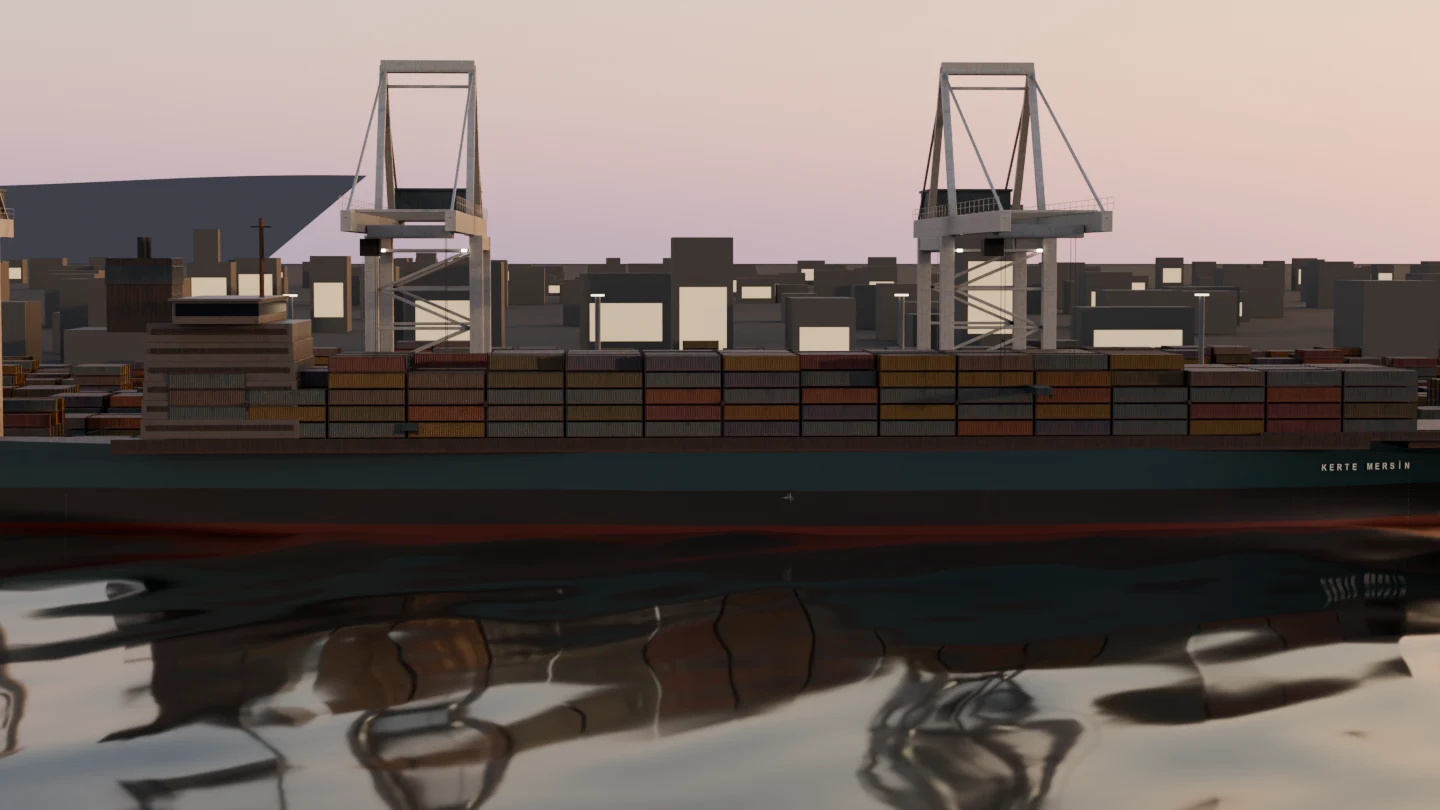
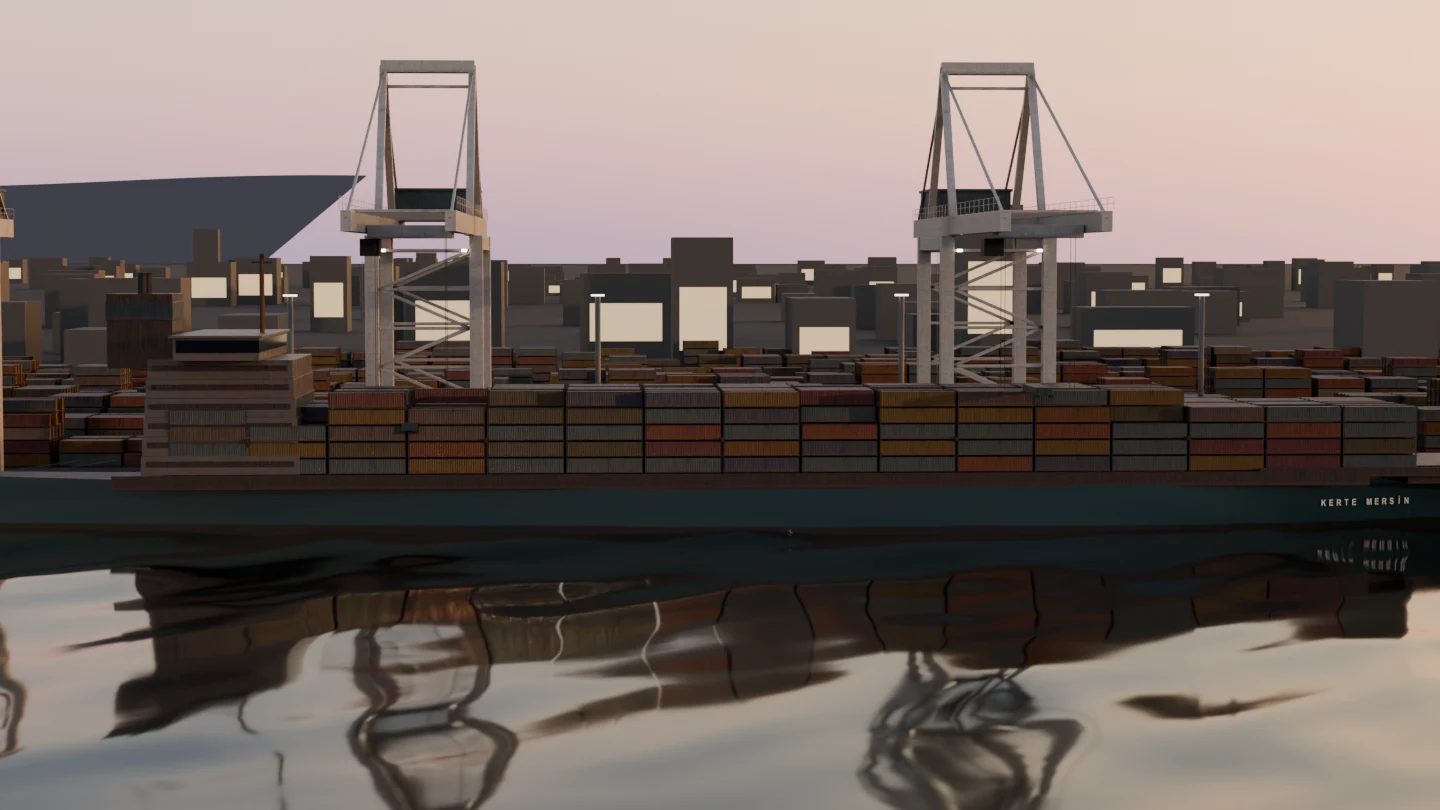
The whole ship, from four hundred metres, at both ends of the range. Same camera, same exposure, same tide — she is simply carrying 36,461 t more.
02 The disc
Samuel Plimsoll's circle.
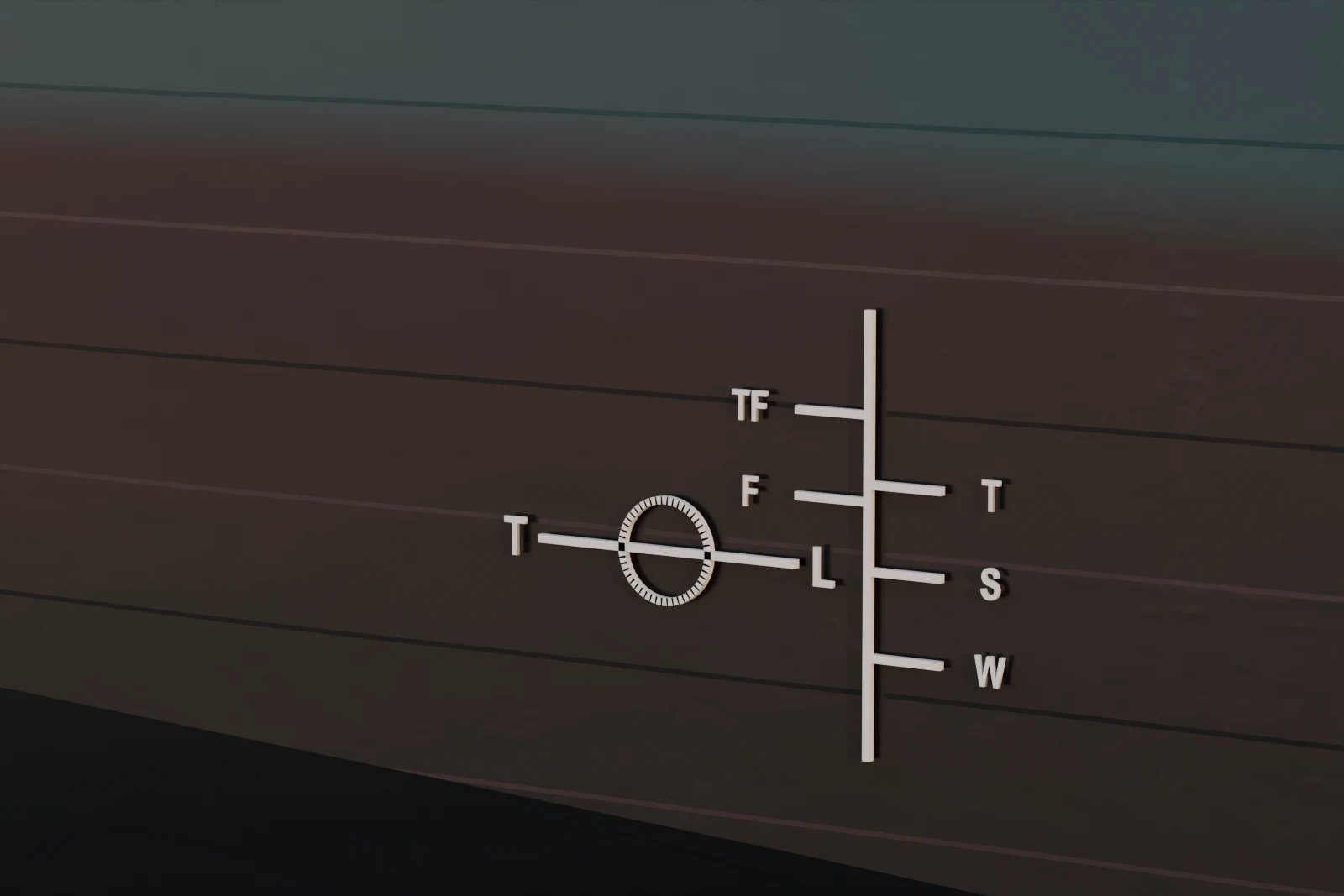
In the 1870s British owners were insuring overloaded ships and losing them with their crews. Plimsoll spent a decade in Parliament being called hysterical, and in 1876 the Merchant Shipping Act made a mark on the hull compulsory. Every load line disc afloat today descends from that fight.
The letters beside the disc are the classification society that surveyed the ship and assigned the mark. Ours read TL — Türk Loydu, founded in İstanbul in 1962.
03 The comb
Five lines, because water is not one thing.
Heights above the keel on KERTE MERSİN.
| Mark | Meaning | Above keel, m |
|---|---|---|
| TF | Tropical fresh | 12.45 |
| F | Fresh | 12.20 |
| T | Tropical | 12.25 |
| S | Summer | 12.00 |
| W | Winter | 11.75 |
Salt water is about 2.5% denser than fresh, so a hull floats higher in the sea than in a river. A ship loaded to her F mark in Rotterdam has risen to S by the time she is in the Channel, and that difference — the fresh water allowance — is roughly 0.20 m on this ship.
Tropical seas are warmer and less dense again, and the weather is better, so T sits above S. Winter sits below it because the North Atlantic in February will take the freeboard you did not leave.
04 Reading it
Draft survey.
Before and after loading, a surveyor reads the draft figures at six points — forward, amidships and aft, both sides — corrects for trim, list, water density and the ship's own deflection, and looks the answer up in the hydrostatic tables. The difference between the two displacements is the cargo.
It is how bulk cargo has been weighed for two centuries, and it is accurate to a few tenths of a percent. There is no scale on earth that can weigh sixty thousand tonnes more cheaply than a painted number and a rowing boat.